Night Survive in Haunt Forest
T.Game StudioAdventure
3.411.00 Reviews
- Version
- 2.0
- Installs
- 1.00M
- Age Rating
- Teen
Screenshots

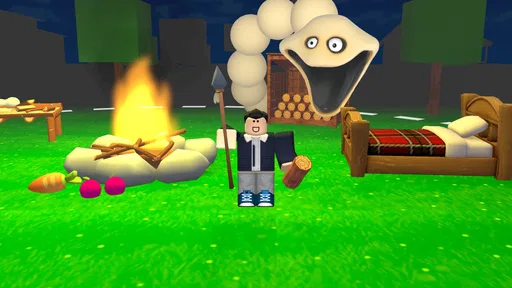
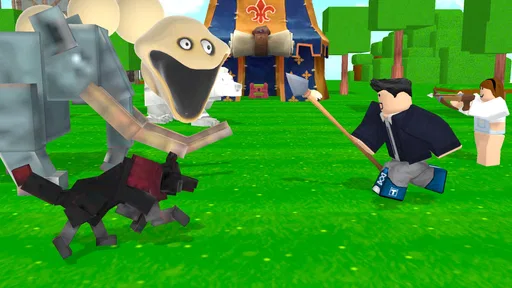
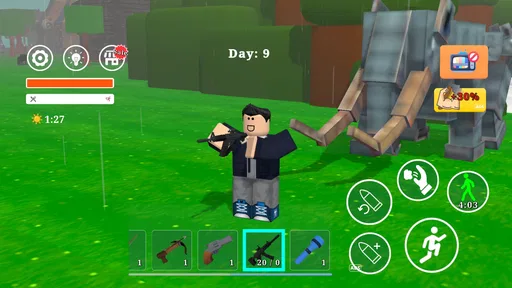
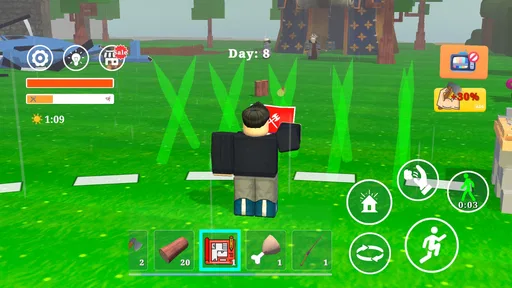
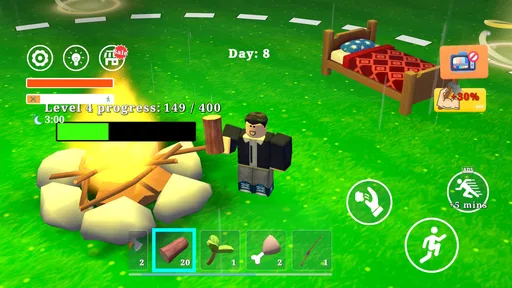
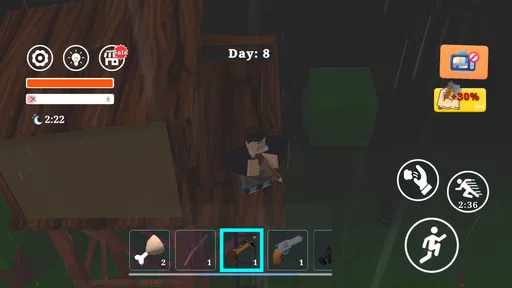

Our Review of Night Survive in Haunt Forest
 Analysis by Appyee
Night Survive in Haunt Forest is a free adventure game from T.Game Studio that puts one simple idea at the center of every session: keep a fire going while trying to make it through frightening nights in a dark forest. I found that its appeal comes less from a complicated rule set and more from the pressure created by limited attention. You are not simply walking through a spooky setting; you are constantly deciding what deserves your next move when safety depends on staying prepared.
That makes it an easy game to understand but a more demanding one to play well. The basic goal is clear almost immediately, which is helpful if you want something you can start without reading a long tutorial. At the same time, the forest atmosphere gives ordinary actions more weight. A short trip away from the fire can feel like a calculated risk rather than harmless exploration, especially when the night cycle starts to control your pace.
The game is listed for Teen players, and I think that fits its haunted setting and survival tension. It is not the right pick if you want a relaxed adventure with a cheerful tone. If you enjoy dark environments, repeated attempts, and learning from mistakes, however, the idea has enough room to keep you interested beyond the first launch.
How the forest loop feels in everyday play
I approach each run as a small routine rather than a race: check the fire, choose one reason to leave, and decide in advance what will make me turn back. That makes a quick session easier to pick up after a busy day, while still leaving room for the forest to unsettle my plans. The next section looks at how those habits can make repeated nights feel more deliberate.
Start with a cautious baseline
My most reliable way to approach a session is to treat the fire as the center of the entire route, not as something I check only when trouble begins. Early exploration is tempting because the forest invites curiosity, but moving too far before understanding the rhythm of a night can turn a promising run into a rushed retreat. I get better results by making short trips, returning to safety, and using each return to reassess what I learned.
This baseline workflow is especially useful for a first-time player. Rather than trying to cover a large area immediately, I focus on learning how far I can comfortably travel, how much time I can spend away from the fire, and which decisions tend to create pressure later. These are not glamorous discoveries, but they are the foundation for consistent progress. The strongest early habit is controlled exploration, not maximum exploration.
A realistic everyday scenario would be playing for a few minutes during a break, then returning later with only a rough memory of what happened. In that situation, a repeatable routine matters. I begin by checking the fire, take a familiar route, avoid unnecessary detours, and return before the situation becomes desperate. This makes the game easier to resume than a strategy based on improvising every move from scratch.
The fire also works as a mental anchor. When I lose track of where I am or start reacting emotionally to the atmosphere, returning to it resets my thinking. That is one of the more useful lessons the game teaches without needing a complicated system: survival improves when every excursion has a clear reason for ending.
Use the first attempts as reconnaissance
New players often judge an attempt only by whether they survived the night. I think that is too narrow. A failed run can still be valuable if it reveals a safer route, a timing mistake, or a tendency to leave the fire too late. I recommend treating early attempts as reconnaissance sessions. Take note of what caused the run to unravel, then change one habit at a time rather than changing everything at once.
This approach prevents a common frustration with survival adventures: repeating the same mistake while hoping the next attempt will somehow feel different. If the problem was wandering too far, shorten the route. If the problem was waiting until the last moment to return, begin the trip back earlier. If the problem was rushing because of the atmosphere, slow down and use the fire as a checkpoint.
That method also makes the game less dependent on luck from the player’s point of view. Even when an attempt goes badly, I can usually identify a decision worth adjusting. For me, that is where the adventure becomes more satisfying than a purely atmospheric horror experience. The forest is not only a backdrop; it becomes a test of whether I can build a repeatable response to pressure.
Settings worth checking before chasing speed
Because the game is built around darkness and tension, I would check the available device and game settings before settling into longer sessions. The most important practical questions are whether the display is comfortable in a dark room, whether audio is at a level that lets you notice important cues without becoming tiring, and whether the controls feel dependable on your device. These checks do not change the game’s design, but they can change how readable and manageable it feels.
I prefer to make the screen comfortable rather than simply brighter. Excessive brightness can weaken the atmosphere and make a night session unpleasant, while too little visibility can turn careful movement into guesswork. A middle setting that preserves the dark mood but lets me distinguish the environment is a better compromise. If you play in different places, it is worth adjusting for the room instead of assuming one brightness level works everywhere.
Audio deserves similar attention. Haunted games often rely on sound to make distance and danger feel uncertain, but loud effects can become tiring during repeated attempts. I keep the volume high enough to stay aware of the environment and low enough that a sudden effect does not make me react blindly. Headphones may make the forest feel more immediate, but speakers are more comfortable for short casual sessions. The better choice depends on whether you value immersion or easy, low-pressure play.
I would also spend a few minutes testing the controls before beginning a serious run. A survival game punishes hesitation, and hesitation caused by unfamiliar input feels especially unfair. Use the opening moments to confirm how movement, interaction, and any available quick actions respond. If the game offers adjustable control options on your device, choose the arrangement that keeps your most frequent action easy to reach rather than selecting a layout that merely looks neat.
These checks are not hidden advantages, and they do not turn the game into something easier than intended. They simply remove avoidable friction. A player who can see comfortably, hear without fatigue, and move without second-guessing the controls has a fairer chance to learn the actual survival loop.
Build faster patterns without becoming reckless
Once I understand the basic route, I stop thinking of every excursion as a separate adventure. I start grouping actions into patterns. For example, I may leave the fire with one clear purpose, complete that purpose, and return immediately instead of adding a second objective because the first trip went smoothly. This keeps the run predictable and reduces the number of decisions I need to make when the night becomes stressful.
The best shortcut in this game is usually a decision shortcut, not a movement trick. Before leaving the fire, I decide what would make me turn back early. That might be reaching a familiar point, noticing that the situation is becoming unsafe, or realizing that the original goal is no longer worth the risk. Having that rule in mind stops me from negotiating with myself in the middle of a tense moment.
I also recommend separating learning runs from ambitious runs. During a learning run, I deliberately test one route or one timing choice and accept that the attempt may end early. During an ambitious run, I use only the routes and habits I already understand. Mixing both goals can create confusion: you may take an unnecessary risk for information and then feel frustrated when it damages a run that was supposed to be about progress.
Another useful pattern is to keep the return route mentally simpler than the outward route. Exploration naturally creates distractions, but the way back should be familiar enough that I am not making new decisions while under pressure. This is a small planning detail, yet it makes a noticeable difference. I would rather explore a little less and return confidently than cover more ground and lose the fire because I did not leave enough attention for the trip home.
These habits are particularly helpful on a phone. Short sessions encourage impulsive play, and touch controls can make hurried decisions feel less precise. A deliberate loop gives each session a beginning, middle, and end: prepare, make one purposeful excursion, then return and reassess. That structure makes the game suitable for brief play without turning every attempt into a chaotic gamble.
Where experienced play still meets a ceiling
Night Survive in Haunt Forest rewards discipline, but I would not confuse discipline with complete control. The game’s appeal depends on uncertainty and atmosphere, so players who want every outcome to be perfectly predictable may eventually find its limits frustrating. Careful planning improves your chances and your understanding, but it does not necessarily remove the tension that makes the forest interesting.
There is also a trade-off between immersion and efficiency. Playing with a darker screen, headphones, and a slower pace can make the setting more convincing, but it may not be the most comfortable choice for a long session. Conversely, optimizing every movement can make the game feel more like a checklist than a haunted adventure. I think the right balance is to speed up familiar routes while preserving caution whenever the environment is still teaching you something.
The game may not satisfy players looking for a large, story-heavy adventure with extensive character development or a broad collection of systems. Its central idea is narrower: survive the forest’s nights by managing your relationship with the fire and the surrounding darkness. That focus can be refreshing, but it also means the experience is best judged as a concentrated survival challenge rather than a full-scale role-playing game.
I would also skip it if you dislike repeating similar situations to improve. The game’s learning curve is tied to practice, and players who expect constant new content may interpret that repetition as a weakness. A different adventure game would be a better choice if your priority is a guided narrative, frequent set pieces, or a large world that continually introduces new mechanics.
On the other hand, players who enjoy refining routes should find more depth than the short store summary suggests. The meaningful progress is often in the player’s behavior: leaving earlier, choosing a clearer objective, recognizing when curiosity has become greed, and using the fire as a dependable reset point. Those are modest systems, but they create a satisfying difference between a nervous first attempt and a controlled later run.
Who should install it and who should pass
I think this adventure is a good fit for someone who wants a free, atmospheric game that can be understood quickly but improved through repetition. It works particularly well for players who enjoy setting personal goals, such as completing a route without unnecessary detours or surviving by relying on a consistent routine. It is also approachable for someone new to survival games because the core objective is easy to grasp.
It is less suitable for a player who wants a calm experience before sleep, since the haunted setting and survival pressure can keep your attention active. It is also not my first recommendation for someone who needs a richly explained story or a broad range of character customization. The game’s strength is its focused loop, not the number of separate activities it offers.
The current version is 2.0, and the game supports devices running Android 7.0 or later. That makes it accessible to people using older compatible phones, although the actual comfort of play will still depend on the device’s screen, controls, and audio setup. I would check those practical factors before committing to long sessions, especially if you plan to play in dim surroundings.
A realistic comparison with other adventure choices
Compared with a story-led adventure, this game gives me less reason to move forward for plot and more reason to improve my own decisions. Compared with a conventional horror game, it places more emphasis on preparation and retreat than on simply waiting for scripted scares. Compared with a broad survival sandbox, it feels more focused and easier to pick up, but it does not offer the same sense of building an entire long-term world.
That middle position is important. If you want a quick atmospheric challenge, the focused design is an advantage. If you want extensive crafting, open-ended construction, or a continuously expanding map, a larger survival title will probably serve you better. I would choose this one when I want the tension of a dangerous night without first learning a large catalog of systems.
The public response suggests a mixed but substantial audience: it holds a 3.4 average from around 1.8 thousand ratings and has passed one million installs. I read that as a sign that the central concept attracts people, while the focused and repetitive nature may not work equally well for everyone. Those figures are useful context, but my own recommendation depends more on whether you enjoy cautious repetition than on popularity alone.
What I would remember after several sessions
The most important lesson is to protect the rhythm of the run. Keep the fire central, make each trip purposeful, and decide your retreat point before the atmosphere pressures you into staying out too long. These habits sound simple, but they transform the game from a series of anxious reactions into something I can gradually control.
I would also avoid judging the game during the first attempt. The opening experience is mainly about learning how the darkness affects your decisions. Give yourself a few runs to establish a route, test the controls, and discover how much risk feels worthwhile. After that, you can decide whether the loop has enough tension to keep earning your attention.
My recommendation is for players who value careful survival habits over constant novelty. Night Survive in Haunt Forest is free, developed by T.Game Studio, and its Teen-rated atmosphere gives it a clear identity. It is not an all-purpose adventure and does not try to be one. I see it as a compact forest survival challenge where the fire, the night, and your own judgment create the main drama.
For me, the game works best when I play it with a plan but leave room for uncertainty. I prepare the display and audio, learn one route, set a reason to turn back, and then refine that routine instead of chasing speed immediately. If that kind of gradual mastery sounds enjoyable, Night Survive in Haunt Forest is worth trying. If you would rather follow a long story or explore a much broader system-driven world, I would choose another adventure instead.
Verdict
Strengths of Night Survive in Haunt Forest
- Tense nighttime atmosphere keeps exploration engaging.
- Simple controls make movement and survival easy to learn.
- Forest setting creates strong suspense through limited visibility.
- Short sessions suit players looking for quick horror gameplay.
- Survival-focused gameplay rewards careful movement and resource use.
Limitations of Night Survive in Haunt Forest
- Dark scenes can make important paths and objects difficult to see.
- Enemy encounters may feel repetitive after extended play.
- Limited guidance can leave new players unsure what to do next.
- Performance may vary on older phones or lower-end devices.
- Frequent tension and jump scares may not suit every player.
Other Releases by T.Game Studio
View All
Steal Animal: Egg Escape
Adventure4.0
Similar Picks in This Category
View All
Roblox
Roblox Corporation4.2

Pokémon GO
Niantic, Inc.3.5

Ninja warrior: legend of adven
TOH Games4.6

Ninja Arashi
Black Panther4.6

Eyes - The Horror Game
Fearless Games sp. j.4.5

Critical Action:Gun Strike Ops
FPS Shooter & Action Game4.3
Frequently Asked Questions
What is Night Survive in Haunt Forest about?
Night Survive in Haunt Forest is a horror survival game centered on exploring a dangerous, haunted woodland after dark. You must move carefully through the forest, search for useful items, solve environmental challenges, and avoid supernatural threats. The atmosphere relies heavily on darkness, unsettling sounds, and limited visibility, so patience and observation are just as important as quick reactions.
Is Night Survive in Haunt Forest suitable for children?
The game is primarily designed for players who enjoy suspense and horror rather than young children. Its dark setting, frightening creatures, sudden encounters, eerie audio, and themes of being hunted may be unsettling for sensitive players. Parents should check the store rating and content description for their region before allowing children to download it, especially if they are uncomfortable with intense horror imagery.
Can Night Survive in Haunt Forest be played offline?
Whether the complete game works offline can depend on the version, device, and how the developer handles advertisements, verification, or optional online features. The main survival experience may be playable without a constant connection, but it is best to launch the game once while online and check its behavior in airplane mode. An internet connection may still be required for updates or purchases.
Does the game include ads or in-app purchases?
Night Survive in Haunt Forest may use advertising or optional purchases depending on the platform and release version. Ads can sometimes appear between attempts or during progression, while purchases may offer convenience features, cosmetic content, or other extras. Before downloading, review the official store listing carefully and check the purchase settings on your device if you want to prevent unexpected transactions.
What devices are recommended for playing Night Survive in Haunt Forest?
A relatively recent Android or iOS device is recommended for a smoother experience, particularly because horror games often use dynamic lighting, atmospheric effects, and detailed environments. Older phones may experience slower loading, reduced frame rates, or battery drain. Make sure your device has enough free storage, install the latest supported system update, and close background apps if performance becomes inconsistent.
Play our best games!


